Philosophy
Showing all 6 resultsSorted by latest
-

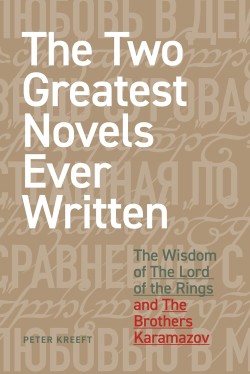
2 Greatest Novels Ever Written
$24.95The Lord of the Rings by J.R.R. Tolkien and The Brothers Karamazov by Fyodor Dostoevsky are both widely regarded as two of the greatest novels ever written. The former, originally published in English between 1954 and 1955, is an epic fantasy set in an ancient world painted with cosmological breadth, while the latter, originally published in Russian in 1880, is a gritty mystery set in a modern world fathomed with psychological depth. Yet both sprawling narratives continue to receive high acclaim and inspire countless readers around the world.
In this philosophical exploration, Peter Kreeft argues that The Lord of the Rings and The Brothers Karamazov are not just two of the greatest novels but simply the greatest two–and not primarily because of their distinct plots, characters, settings, and styles, but because of the metaphysical, anthropological, and moral themes that unite them. Examining the writers’ treatments of good and evil, power and weakness, and virtue and vice, Kreeft shows how both Tolkien and Dostoevsky, by writing with the mind of Christ, reveal the deepest truths of reality.
Add to cartOnly 1 left in stock
-
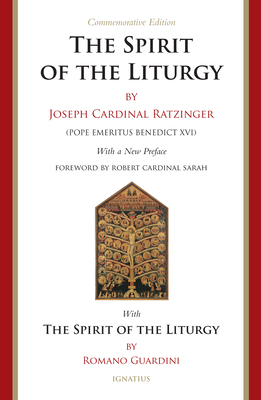
The Spirit of the Liturgy
$19.99In honor of its fortieth anniversary (1978–2018), Ignatius Press presents a special Commemorative Edition of one of the most important works written by Joseph Ratzinger, The Spirit of the Liturgy.
This edition includes the earlier classic work with the same title by Servant of God Romano Guardini, a book that helped Ratzinger to “rediscover the liturgy in all its beauty, hidden wealth and time-transcending grandeur, to see it as the animating center of the Church, the very center of Christian life”.
Considered by Ratzinger devotees as one of his greatest works, this profound and beautifully written treatment of the liturgy will help readers to deepen their understanding of the “great prayer of the Church”. The cardinal discusses fundamental misunderstandings of the Second Vatican Council’s intentions for liturgical renewal, especially about the priest’s orientation of prayer to the Father, the placement of the tabernacle in churches, and the posture of kneeling.
Other important topics are the essence of worship, the Jewish roots of Christian prayer, the relationship of the liturgy to time and space, sacred art and music, and the active participation of the faithful in the Mass.
Add to cartIn stock (additional units can be purchased)
-
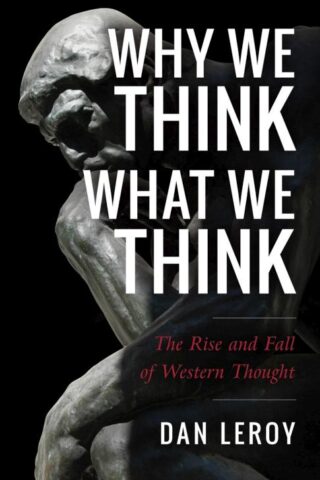
Why We Think What We Think
$19.95We’re all starting to hear people ask how the world has gotten to be the way it is. Grafted onto the usual complaints about why people are so greedy, self-absorbed, and callous toward one another are new expressions of frustration about even more fundamental concerns. Why can’t we agree on concepts that used to be basic common sense? Why does our very language now seem to be a minefield that only the most wily and tactical (or cynical) among us can navigate?
The only way to understand fully how we have arrived at this state – and what, if anything, we might be able to do about it – is to embark on a journey back in time to see where we went off the rails. With candor and occasional humor, Dan LeRoy tells the sweeping story of Western thought from its beginnings to the present, revealing the souls and idiosyncrasies of its greatest thinkers. Through stirring vignettes, he tells the real story of how our customs and thought patterns developed and then relates it to our current moment of rupture.
In pages that sometimes read like an Indiana Jones adventure, LeRoy explains the detour that philosophy took nearly a thousand years ago that has led Western society to its current, dire situation. With sharp pen and clear eye, he reveals:
*The roots of classical philosophy, including empiricism (Ready to wade into the water?)
*How views on ethics and morality began to take shape even before Christ
*The three ways to attain happiness, according to the Big Three philosophers
*Four splinter groups and how their philosophies impact us today
*The enduring teachings of Sts. Augustine and Aquinas, among many othersYou will find out about amazing discoveries during the early days of rationalism, from mathematical equations to intervals between music notes, and how this universal ratio applied to another scientific revelation. Along the way, you will see the relevance of famous (and infamous) beliefs, including the Realm of Forms, the Four Causes, and Pascal’s Wager as well as dualism, humanism, materialism, and pantheism. Additionally, you will learn about how these ideologies provided the basis for modern-day politics, education, and belief in the transcendent, and the bridge between ancient philosophy and Christianity.
LeRoy unveils the ways in which the beliefs our society has largely abandoned still affect our everyday lives. Knowing why we think what we think is the only way to recover the ideas – many of them Christian in origin – tha
Add to cartOnly 1 left in stock
-
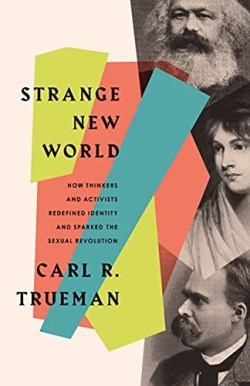
Strange New World
$17.99From Philosophy to Technology, Tracing the Origin of Identity Politics
How did the world arrive at its current, disorienting state of identity politics, and how should the church respond? Historian Carl R. Trueman shows how influences ranging from traditional institutions to technology and pornography moved modern culture toward an era of “expressive individualism.” Investigating philosophies from the Romantics, Nietzsche, Marx, Wilde, Freud, and the New Left, he outlines the history of Western thought to the distinctly sexual direction of present-day identity politics, providing readers with a clearer understanding of the modern implications of these ideas on religion, free speech, and issues related to personal identity. For fans of Trueman’s The Rise and Triumph of the Modern Self, this new book offers a more concise presentation and application of some of the most critical topics of our day.
Add to cartin stock within 3-5 days of online purchase